
One thing I find I get a fair number of calls for is to skim over sprayed ceilings. When doing new drywall, I always recommend to the client to go with the smooth ceiling. I have only done one California sprayed ceiling in the last couple of years. So why are so many ceilings sprayed? The simple answer is that it is easier and less work to spray a ceiling, so home builders made spray their normal option for new homes.
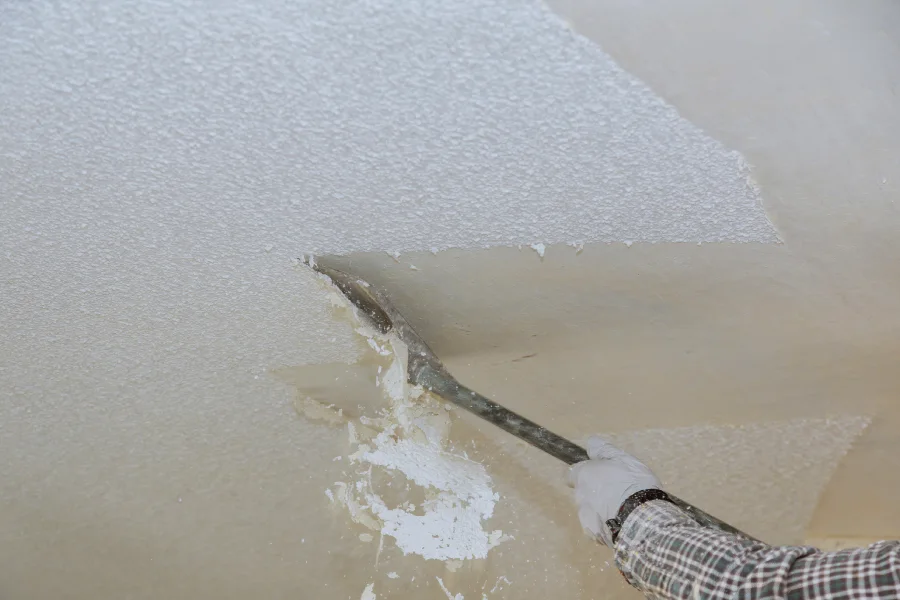
As I have seen over the years, the standard method is to apply tape to the ceilings, then give it one coat and call it done. The usual phrase is “spray will hide everything.” In my opinion, that is not always true. I have been in several houses over the years where I could see the outline of all the drywall panels in the ceilings. It may be less noticeable in daytime, but will be more visible with surface-mounted lights at night, as the shadows will be more prominent.
There are two types of spray: popcorn and California. Popcorn looks like small balls of Styrofoam. Over time, they will turn more of a grey colour or, in the case of smoke or heavy grease from cooking, will turn yellow. The other spray, California, is a special ultra-white compound that is sprayed on the ceiling, allowed to set up a bit, then knocked flat. It can also turn yellow from grease but tends to stay whiter.
One problem with sprayed ceilings is repairing them. If you have water damage or cracking, it may require removing part of the drywall and putting in a new piece for a patch. This patch needs to be taped in, which means the finished area will be larger than the actual damage. This will require the surrounding area to be sanded flat or scraped to allow for the taping of the patch.
Once the patch has been completed, it will need to be primed and then resprayed. This is where things might look different. Popcorn is easy enough to spray a patch over and then blend by spraying beyond the patch to help blend it in with the existing. Depending on the age of the house, the new spray may be whiter than the old spray, thus making the patch stand out.
California will need to be sprayed again. Most guys I have talked with say that it is hard to blend, as the patch sits on top of the original spray, and it will be visible. Another issue is that everyone has their own spray style, which may not match what the current spray guy is doing. I have seen some patches of California that blended well; others, not so much.
Flat ceilings offer a lot more ease and require less work to patch. It is a similar process—cut out drywall if needed, patch it back in—but after you are done, you can prime and paint, and it is finished. No extra steps or mess from the added spray process. From a maintenance point of view, it is easier to maintain.
Another benefit of flat ceilings is that sprayed ceilings, as I have said above, can discolour over time, looking dirty. They also cause a small amount of shadow, which makes your ceilings look dark and will visually make the ceiling look lower. I have found this on all jobs where I have skimmed over and flattened out sprayed ceilings. The customer has also noticed that the room looks bigger with just the smooth mud finish.
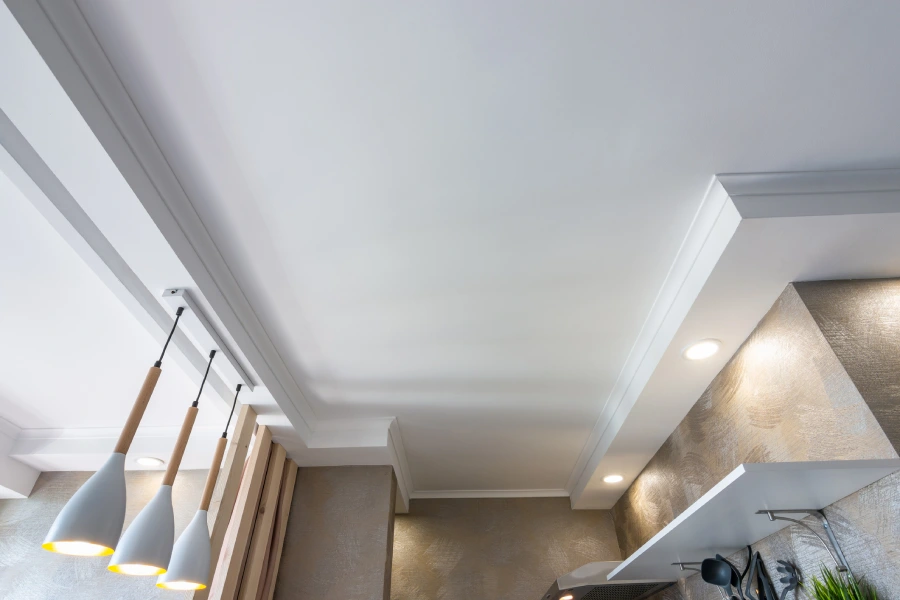
Customers often wonder about things like existing pot lights or octagon boxes from surface-mounted ceiling fixtures. They are not a big deal to cover up when skimming. We just remove the lights. Octagon boxes are more difficult to get out, so sometimes they just stay in, and we patch the holes with new drywall. I like to hit these patches with Sheetrock as a first coat, as it sets up quicker, and I can then start skimming down the whole ceiling. The patches are now part of the overall skimming process. I personally recommend three coats, but sometimes, if the spray came off well enough, two coats are enough.
To remove the spray there are a few options. I have a sanding machine that hooks up to my vacuum, so I like to put on either a 40 or 80 grit paper, depending on the ceiling type, and away we go. It takes time, but it does keep the mess down. If it’s painted popcorn, I use 40 grit, turn up the speed to max, and off I go. The ceiling will not be flat, but a heavy first coat will deal with the uneven surface. The next coat will be much smoother and take less mud. Unpainted popcorn ceilings are easy to sand down. I usually use an 80 grit paper and turn down the speed. California ceilings are a similar process—80 grit and lower speed. The vacuum will get most of the mess, but there will still be some dust, so cleaning up after is still necessary.
One thing with the sanding machine is that it has a round head, so it will not be able to get into the corners. Either you will need a palm sander to get into the angles, or you will need to use a pole sander to flatten them out. Also, you can just take a knife afterward to knock off any heavy spray buildup and then bury it with the first coat. Either option works as long as the finished product is flat.
The old-fashioned method for removing popcorn was to wet it down—if painted—and then scrape. If not painted, you can just scrape it off dry. I used to have to do it this way back in the ancient past—much more mess.
Hopefully, you now understand the process of spray removal and the advantages of flat ceilings. If you have old sprayed ceilings, including plaster patterned, and you would like to flatten them out, feel free to call Cambridge Contracting Services.